 AN OPEN-AIR MUSEUM
THE PLACES OF THE FIRST WORLD WAR IN ALTA VALTELLINA
INTRODUCTION
During the First World War, the area of the Stelvio Pass and the surrounding peaks were affected by an unprecedented human presence. The frontier between the Kingdom of Italy and the Austro-Hungarian Empire ran between these peaks, many of which were not climbed for the first time until the 1860s.
In the early days of the conflict, in May 1915, the two armies took up their positions in the area of the Stelvio Pass, but once the Italian hopes of a fast and victorious end to the conflict had vanished, reality imposed a re-adaptation to the new prospect of a long war.
The two belligerents had to prepare everything necessary to guarantee the survival of the troops and to maintain the line of the front at an altitude where there had never before been fighting in the winter.
The human presence on the mountains, even the highest, became pervasive on both sides. New roads and mule tracks were opened and cableways were implemented, and telegraphic and telephone lines were erected. Along the daring communication routes, encampments for men, traction animals and vehicles, medical posts, canteens and stores were built. The line of the front was massively fortified with up to three lines made up of trenches, stationings in caves, tunnels, covered communication routes, shooting stations and emplacements for artillery.
Traces of these formidable infrastructures are still visible along many of the hiking routes in the area of the Stelvio National Park, dotted by trenches dug out in the earth or built with drystone walls, shooting stations reinforced in rock and concrete and brickwork or wooden huts. How the land was destroyed by the tens of thousands of grenades shot by the artillery of both sides throughout the conflict can still be seen today. The monuments and the places of prayer dedicated to the war dead are a sad warning of the horrors of war. These traces, which are documented in the exhibition presented here, are an integral part of the historical heritage safeguarded, protected and promoted by the Stelvio Park.
Franco Claretti
Director of the Stelvio National Park
Lombardy section

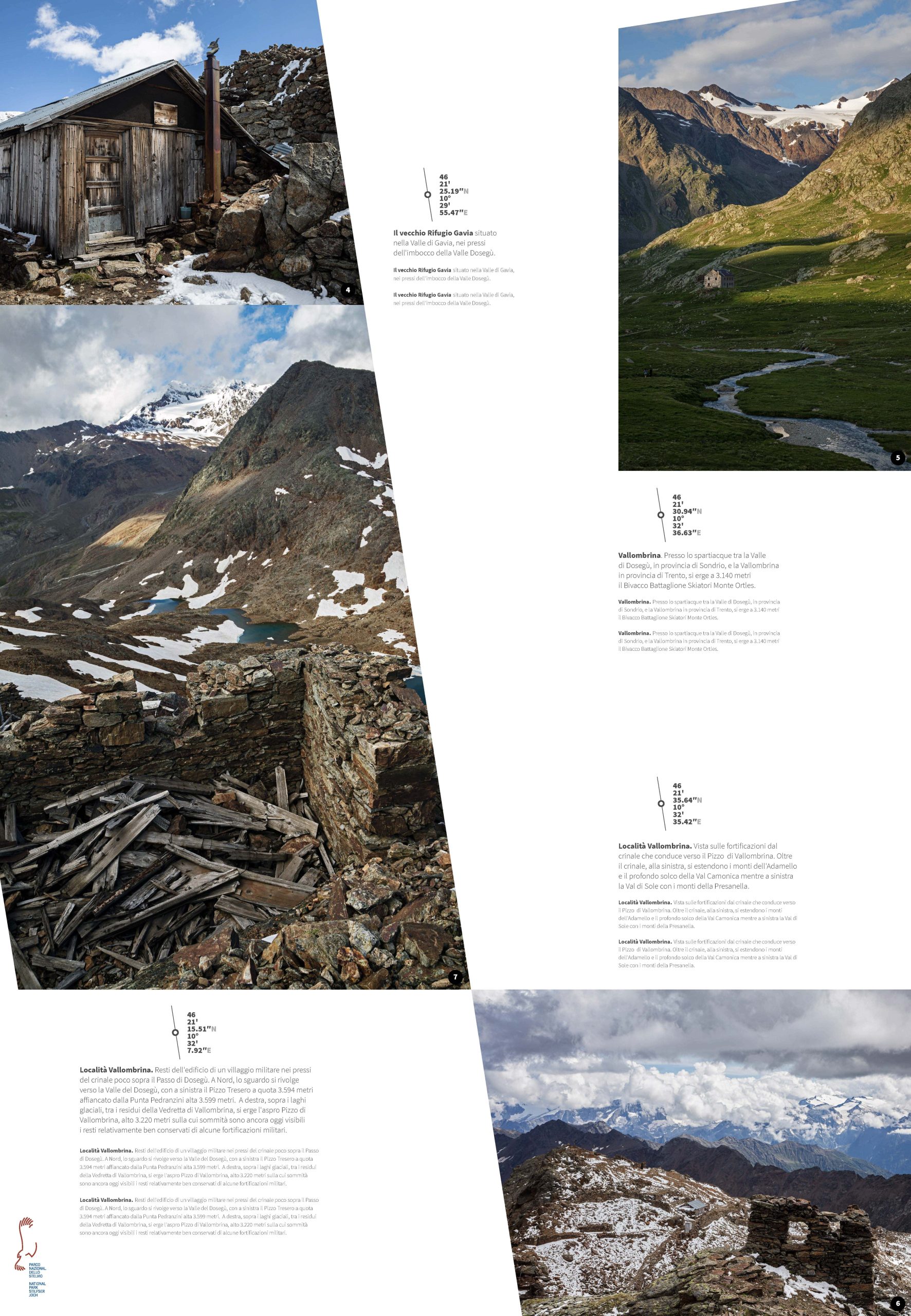
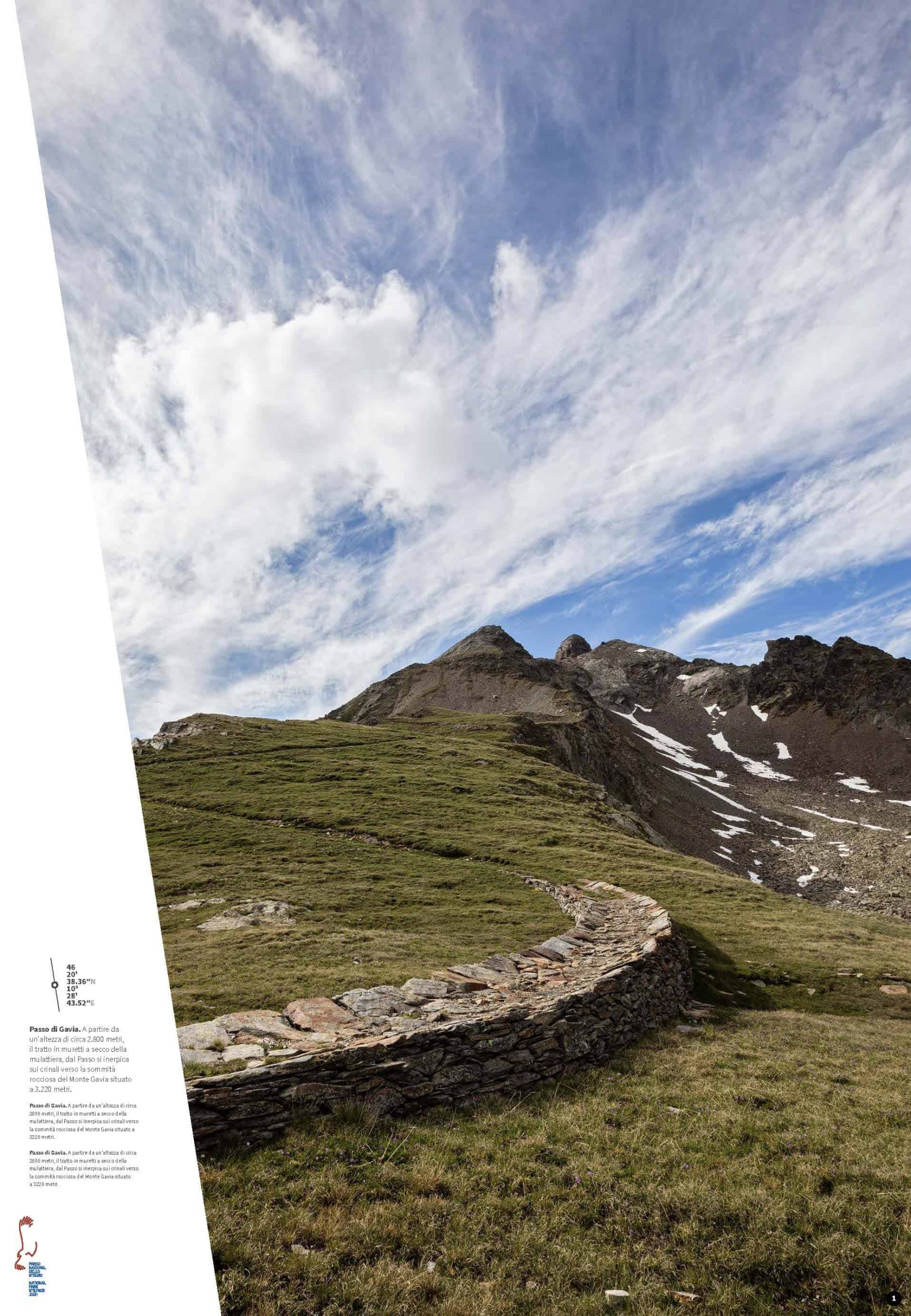
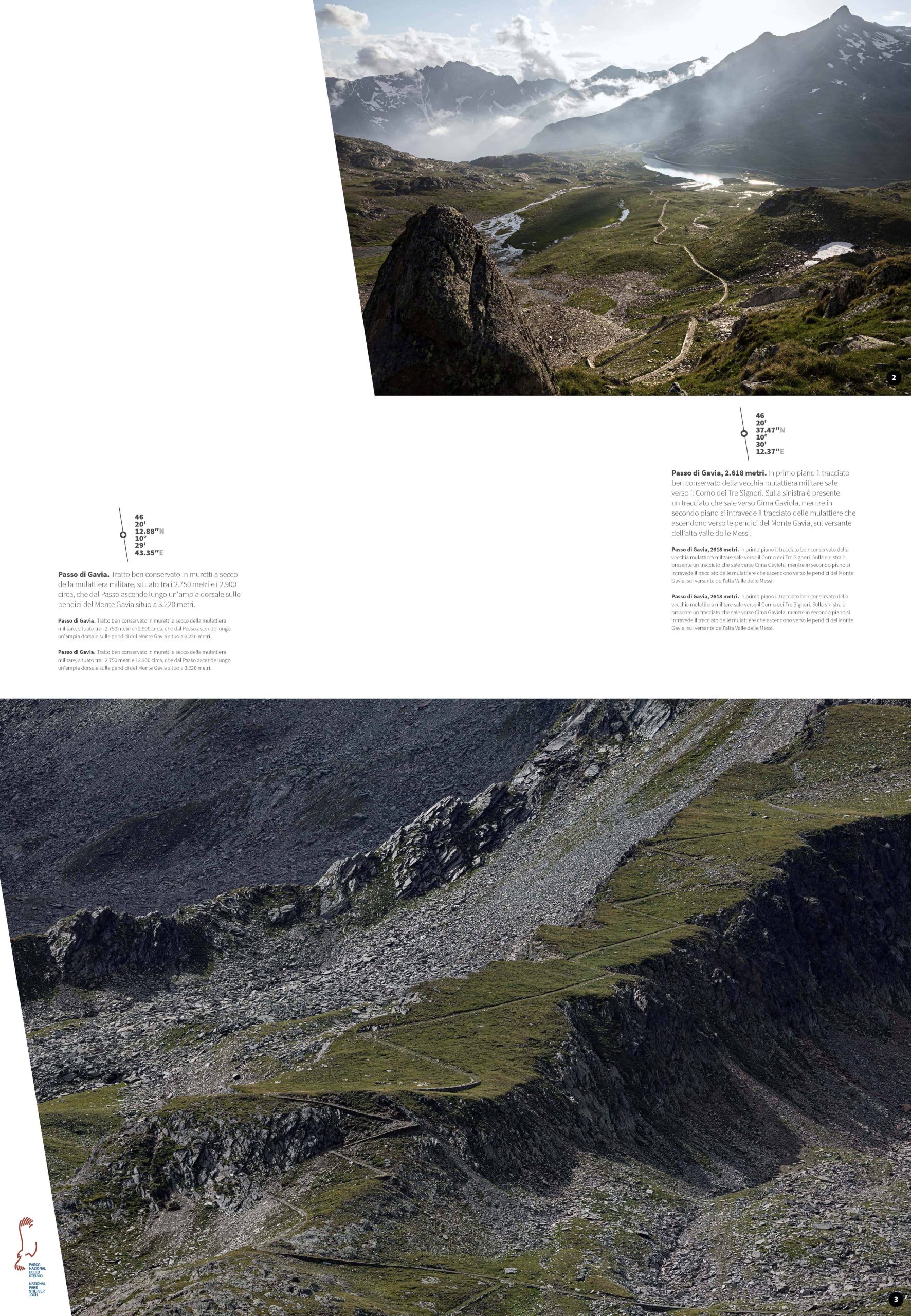
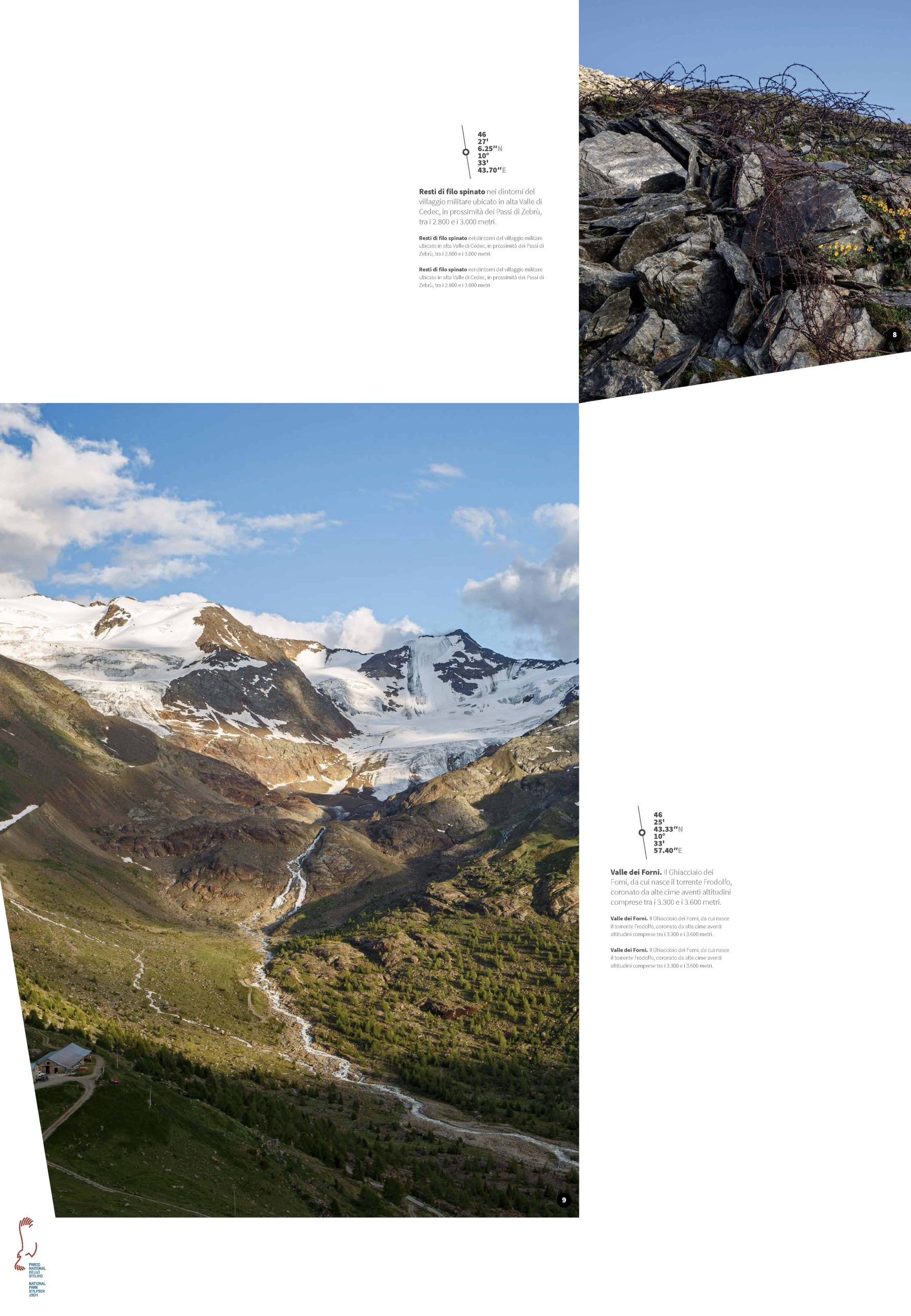
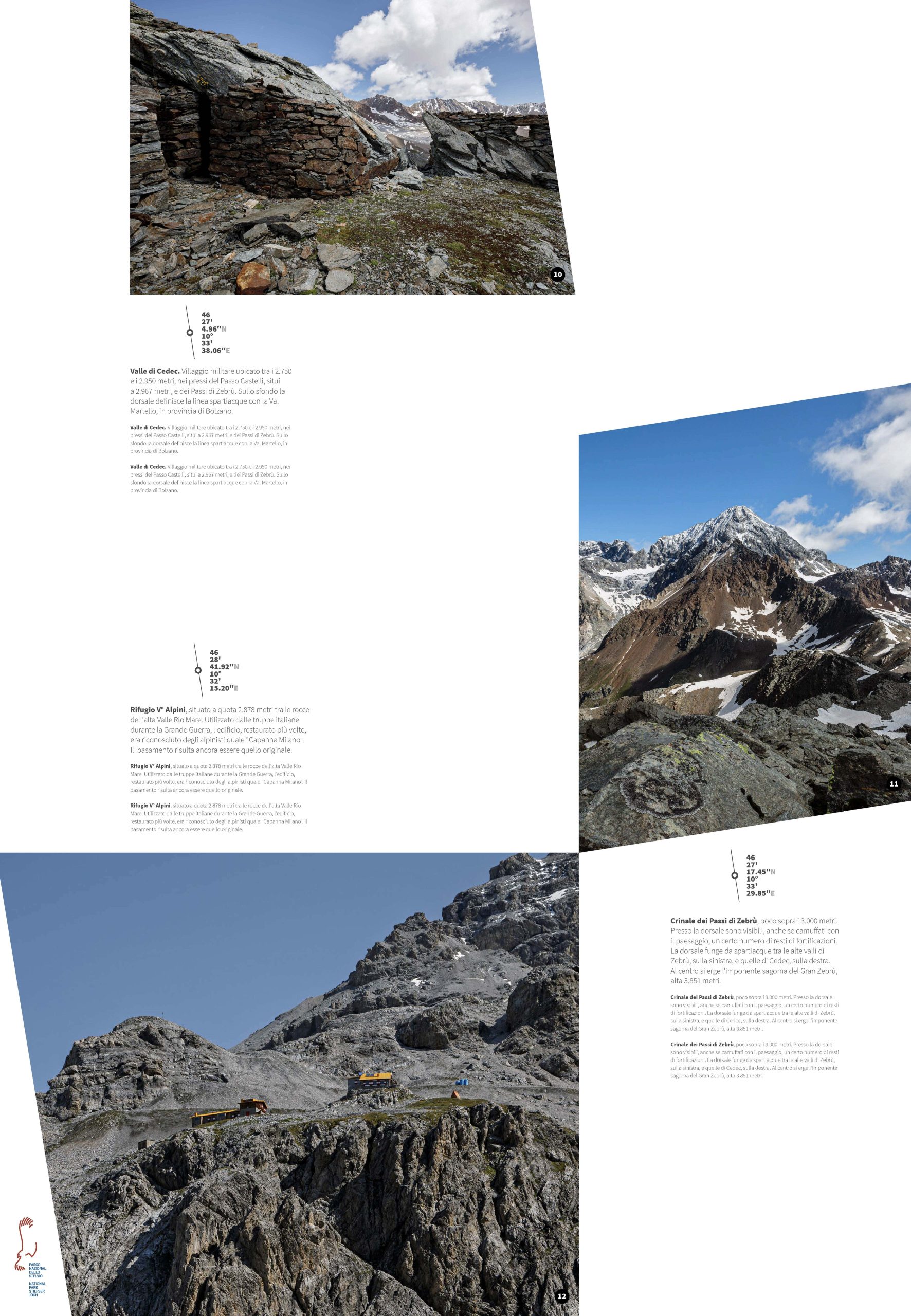
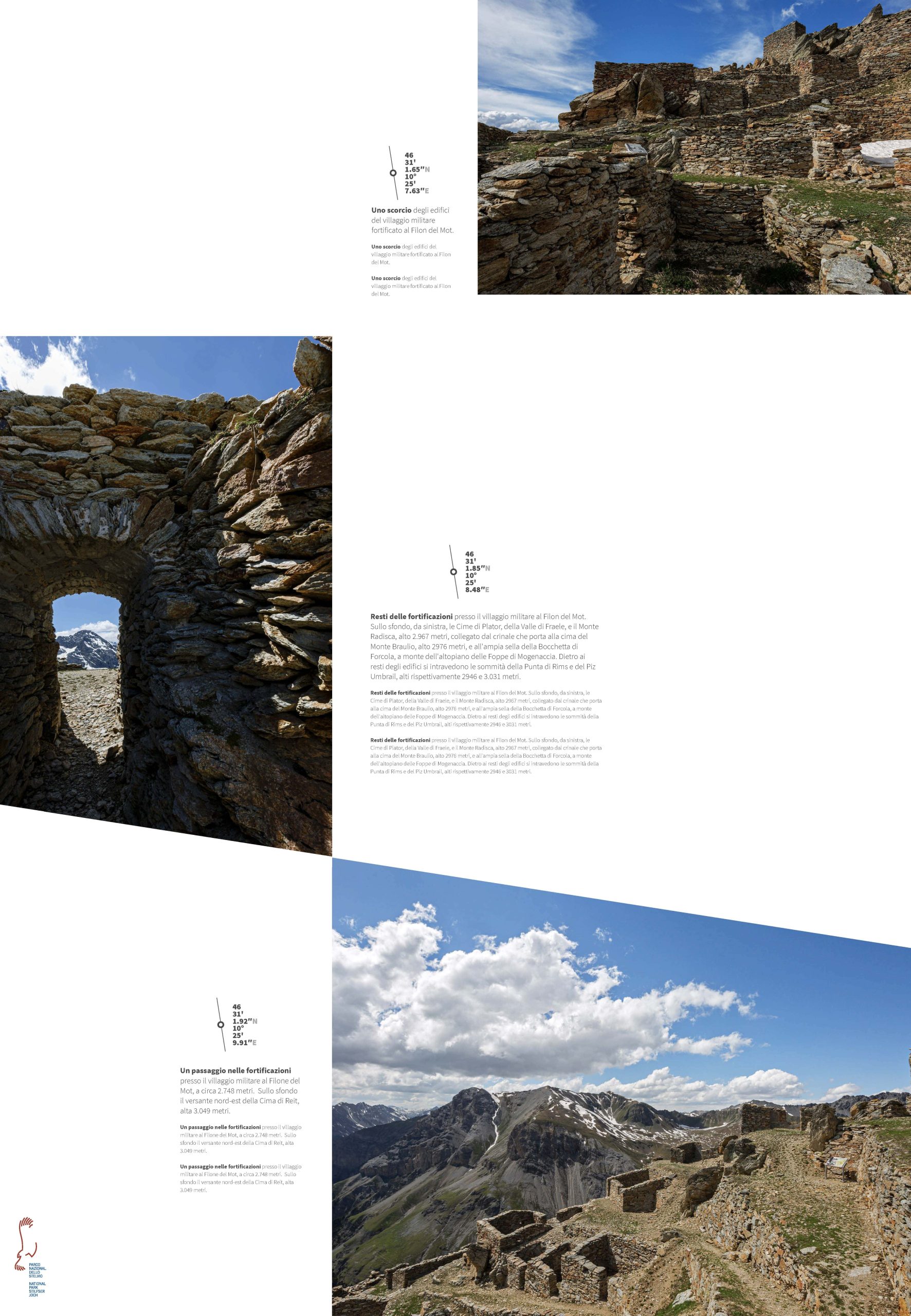
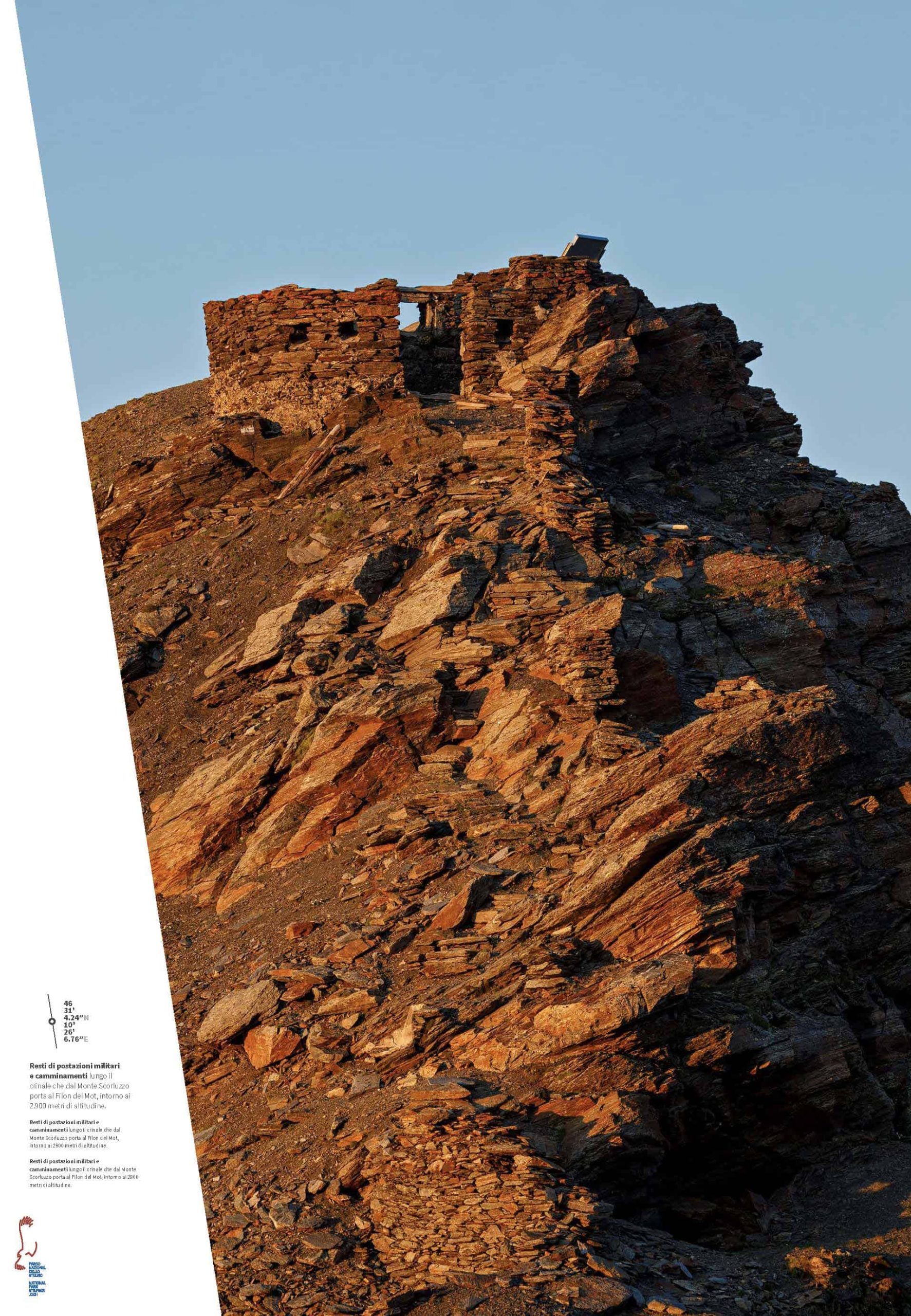
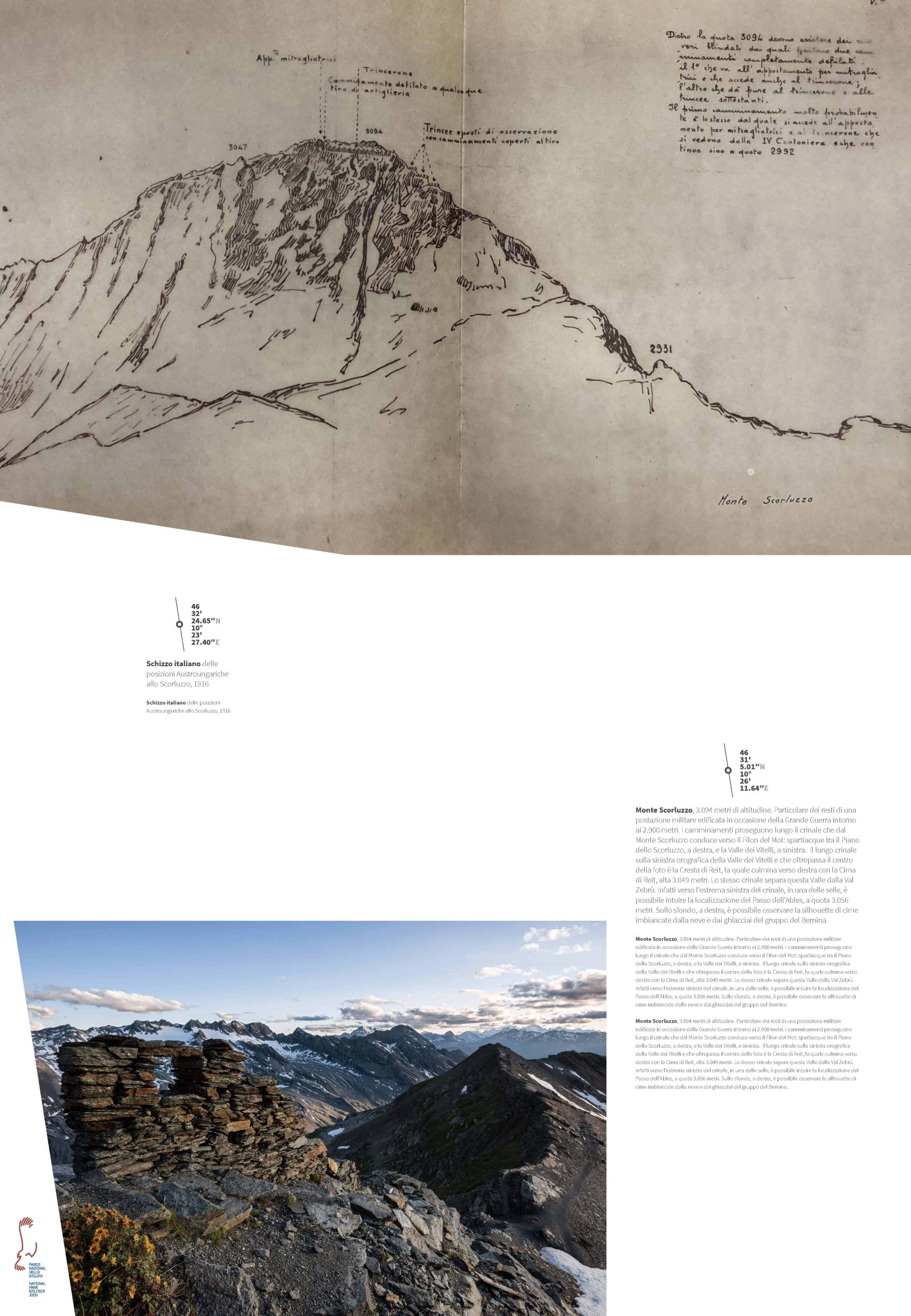
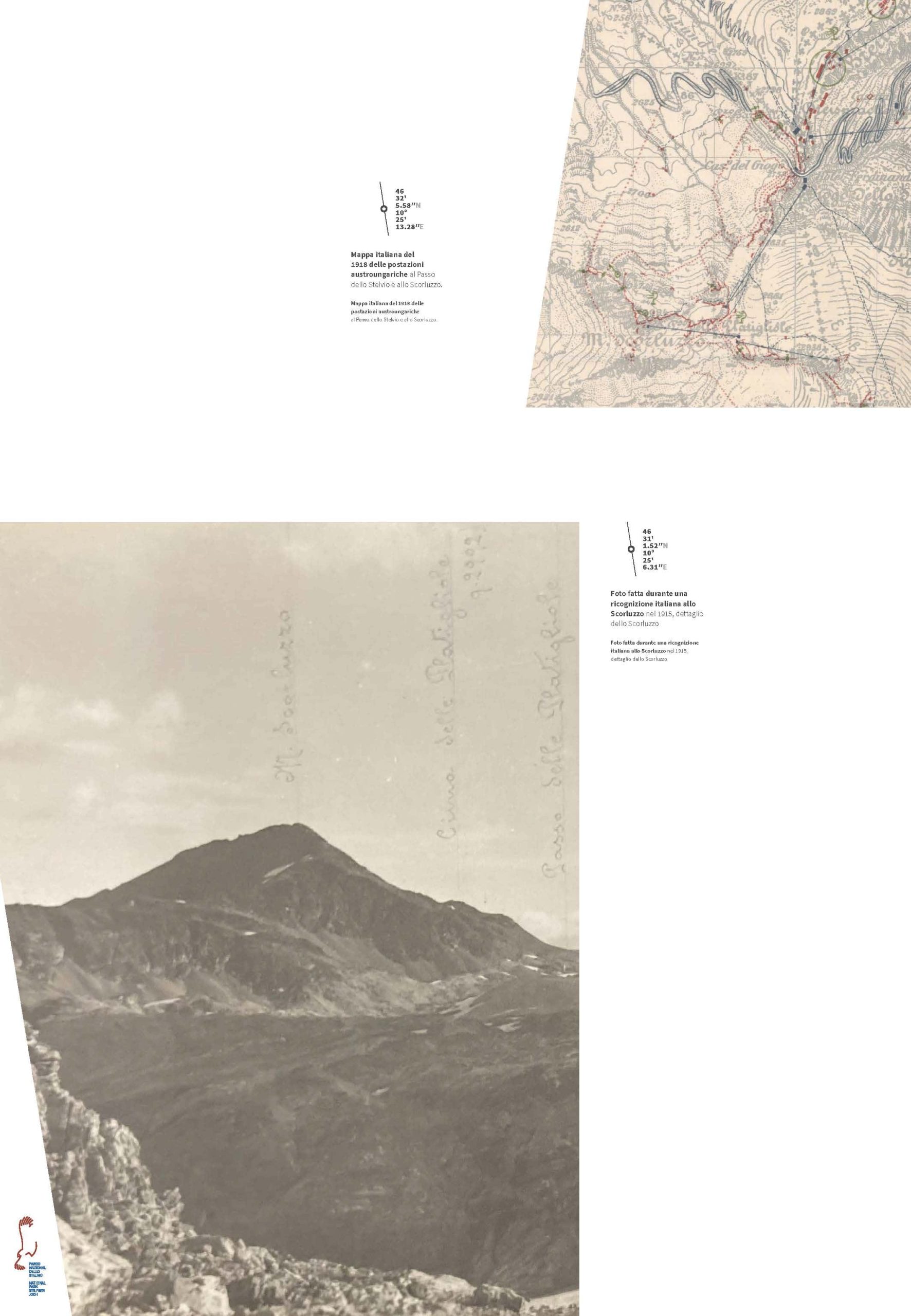
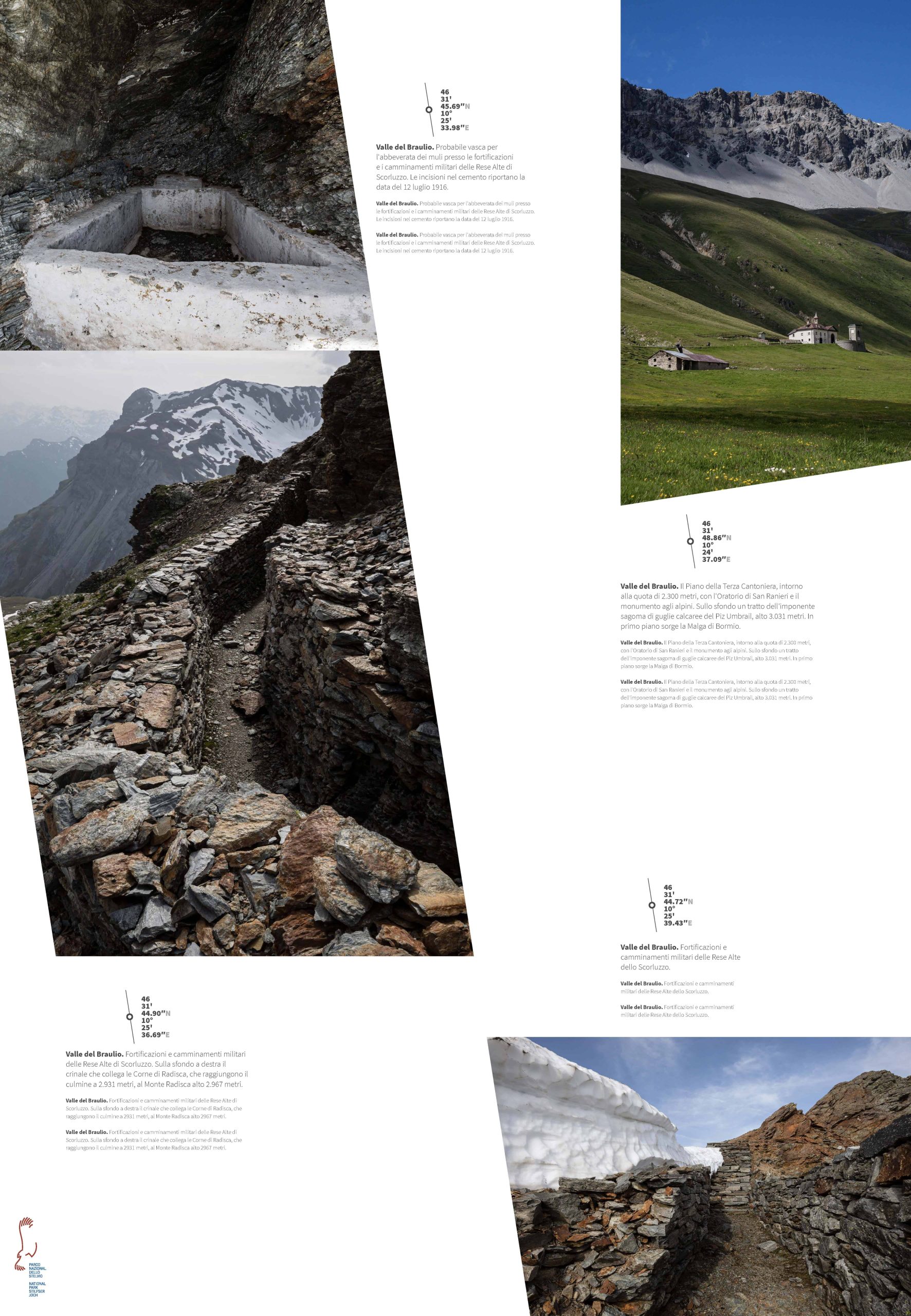
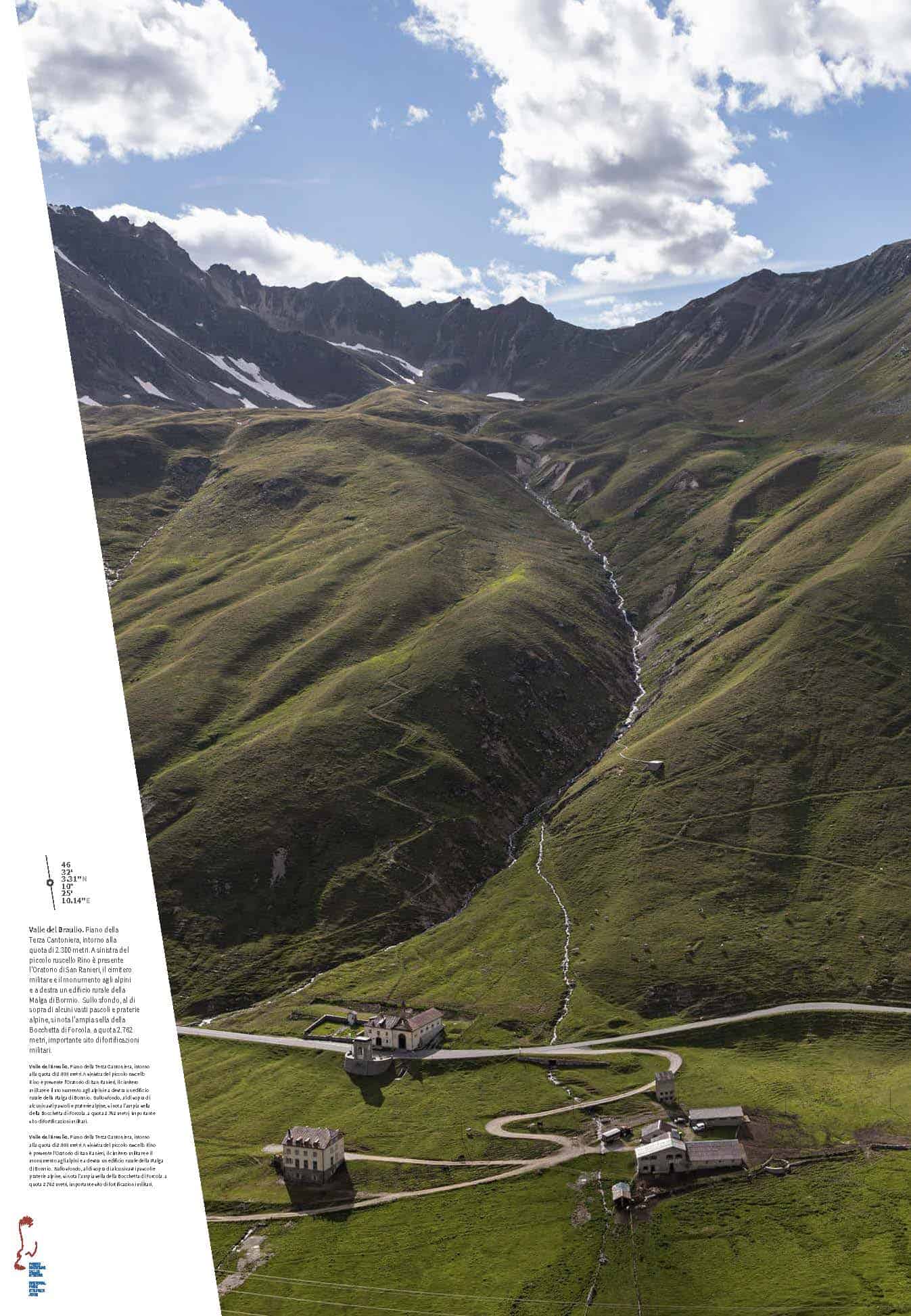
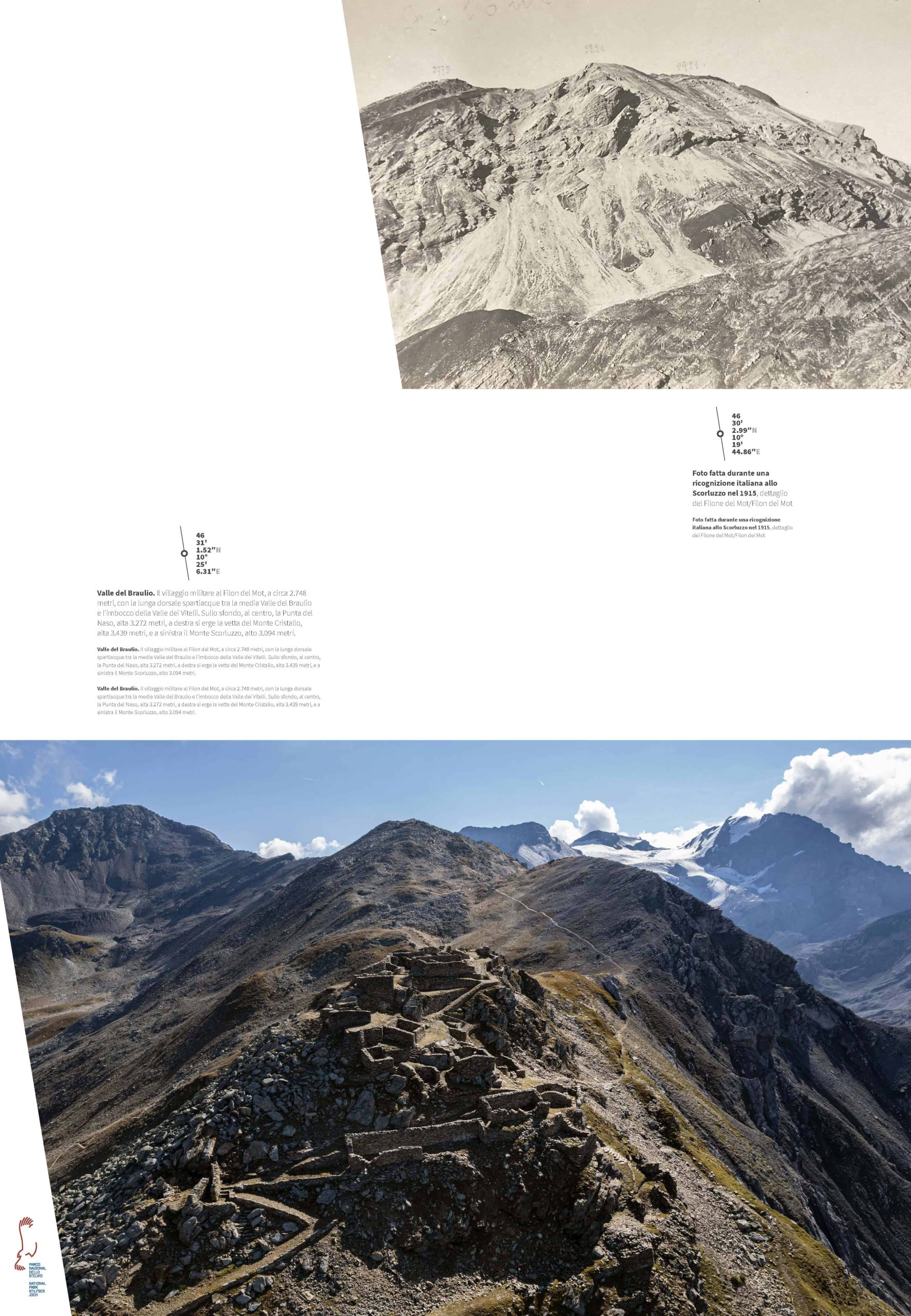
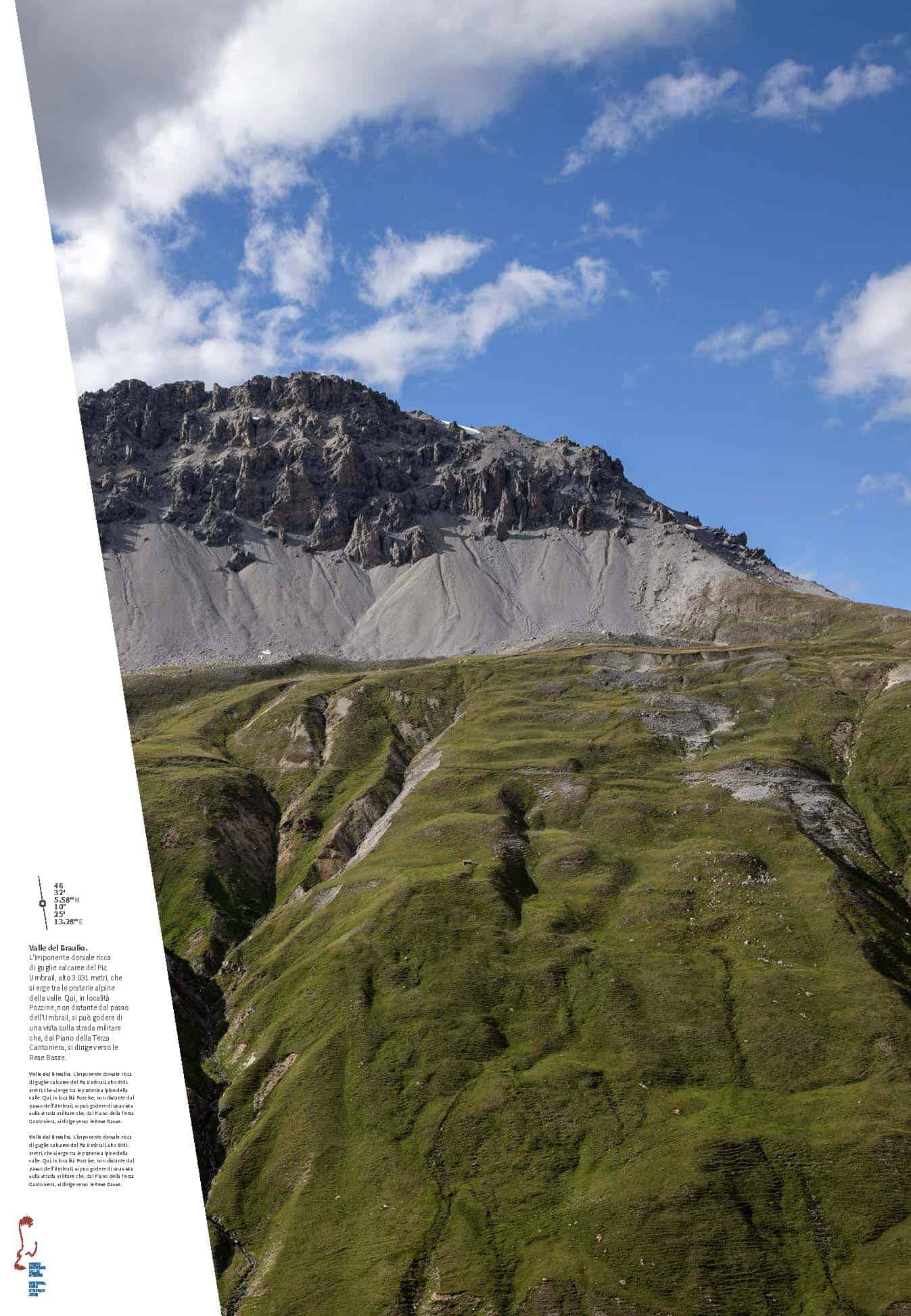
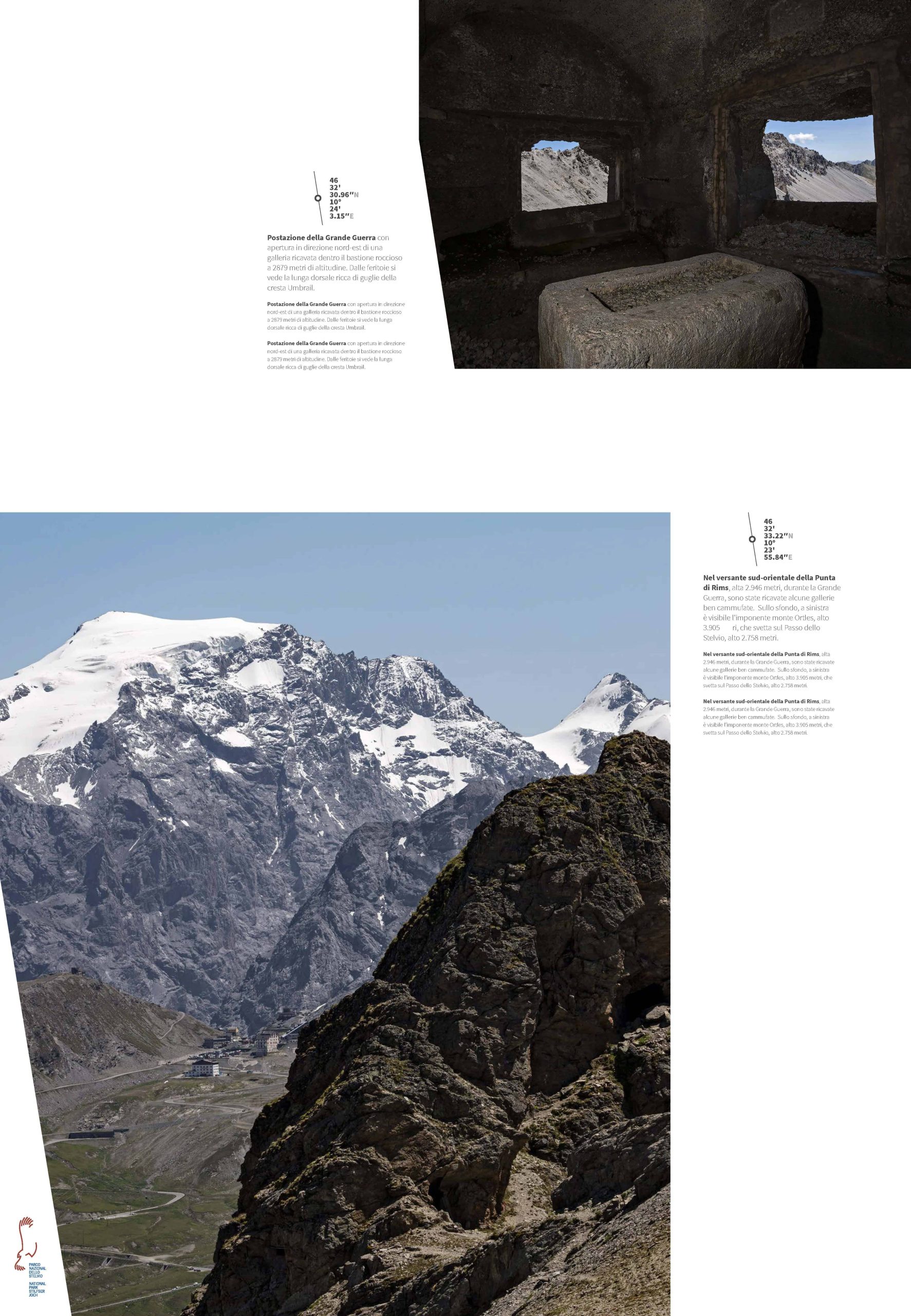
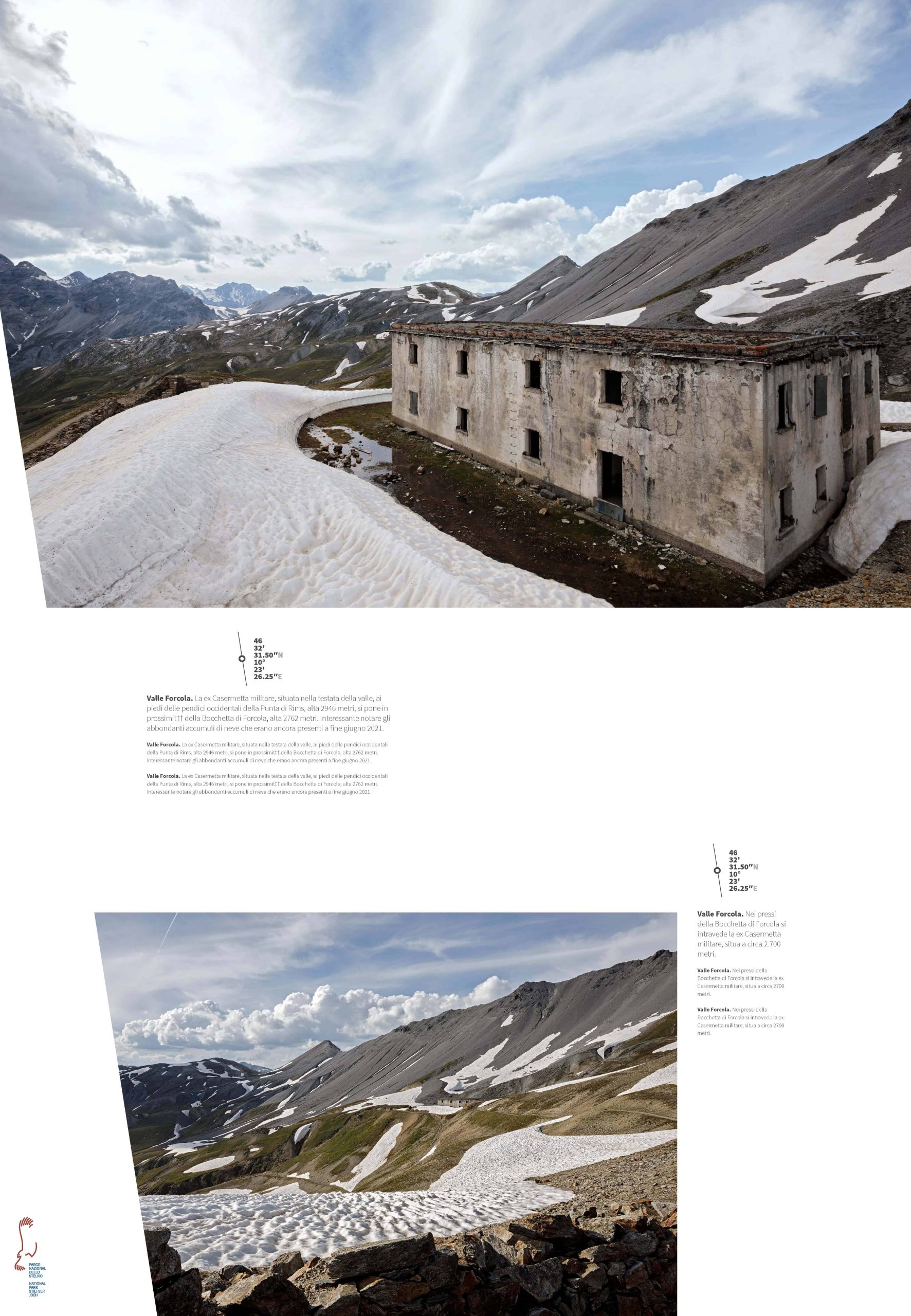
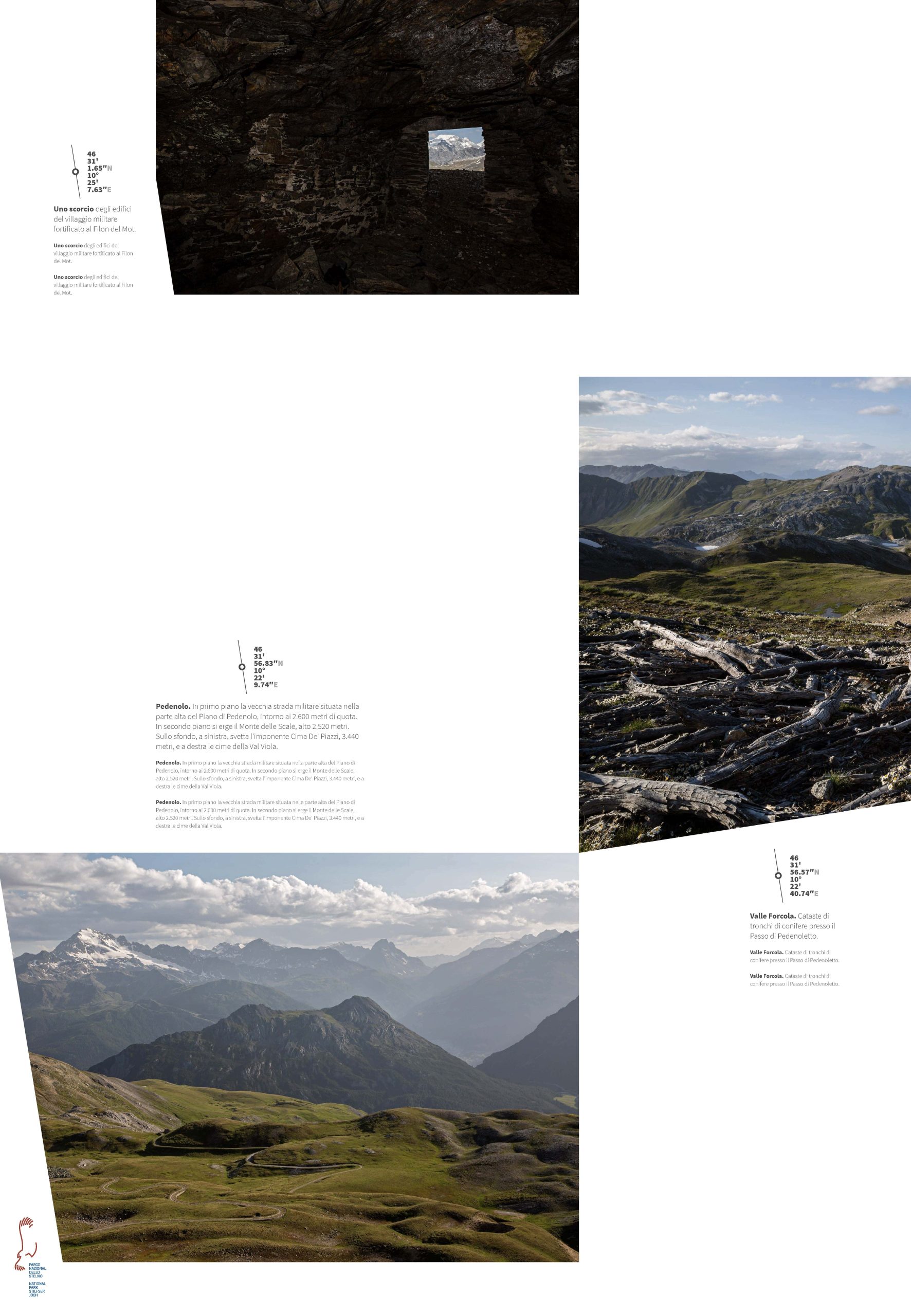
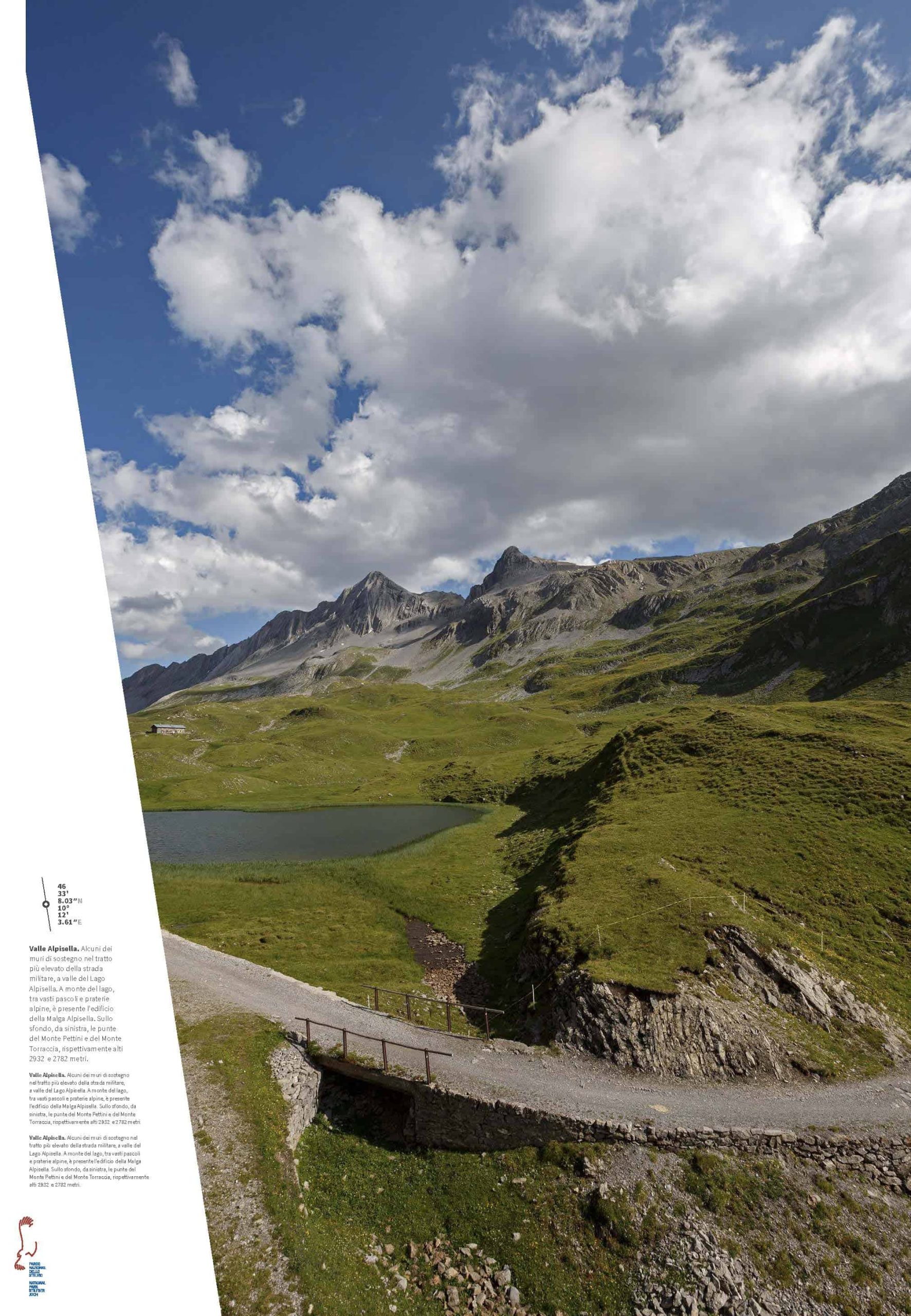
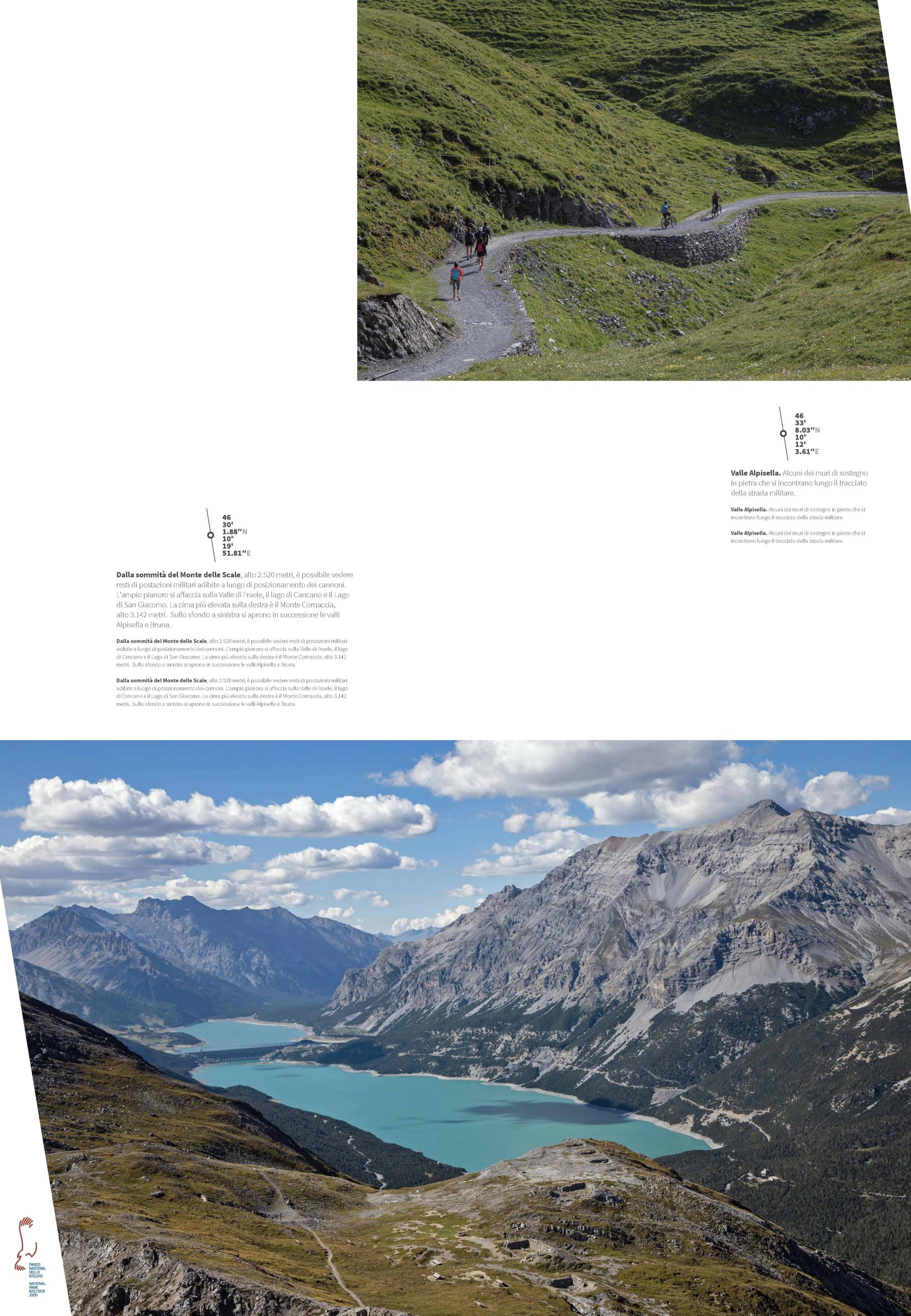
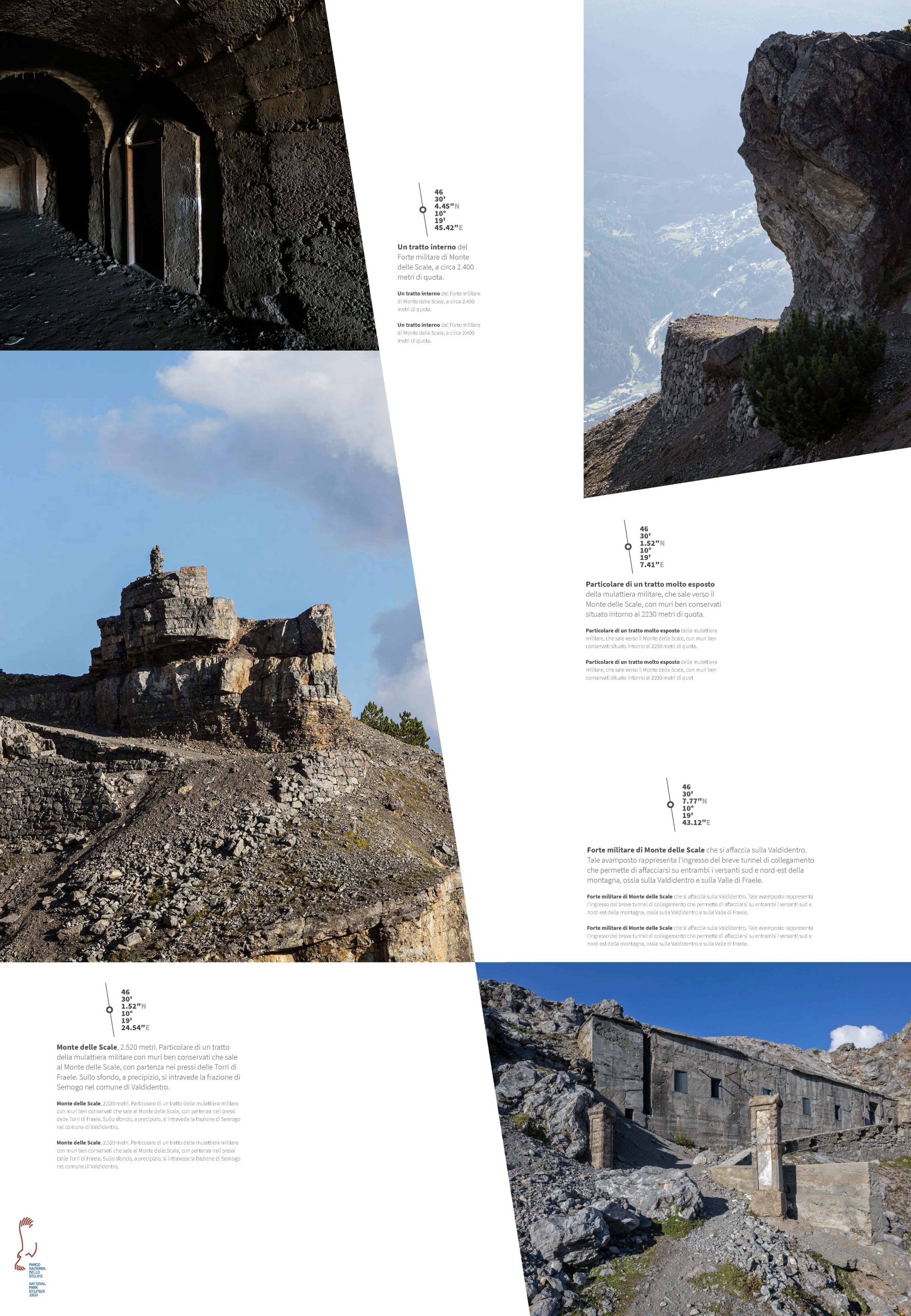
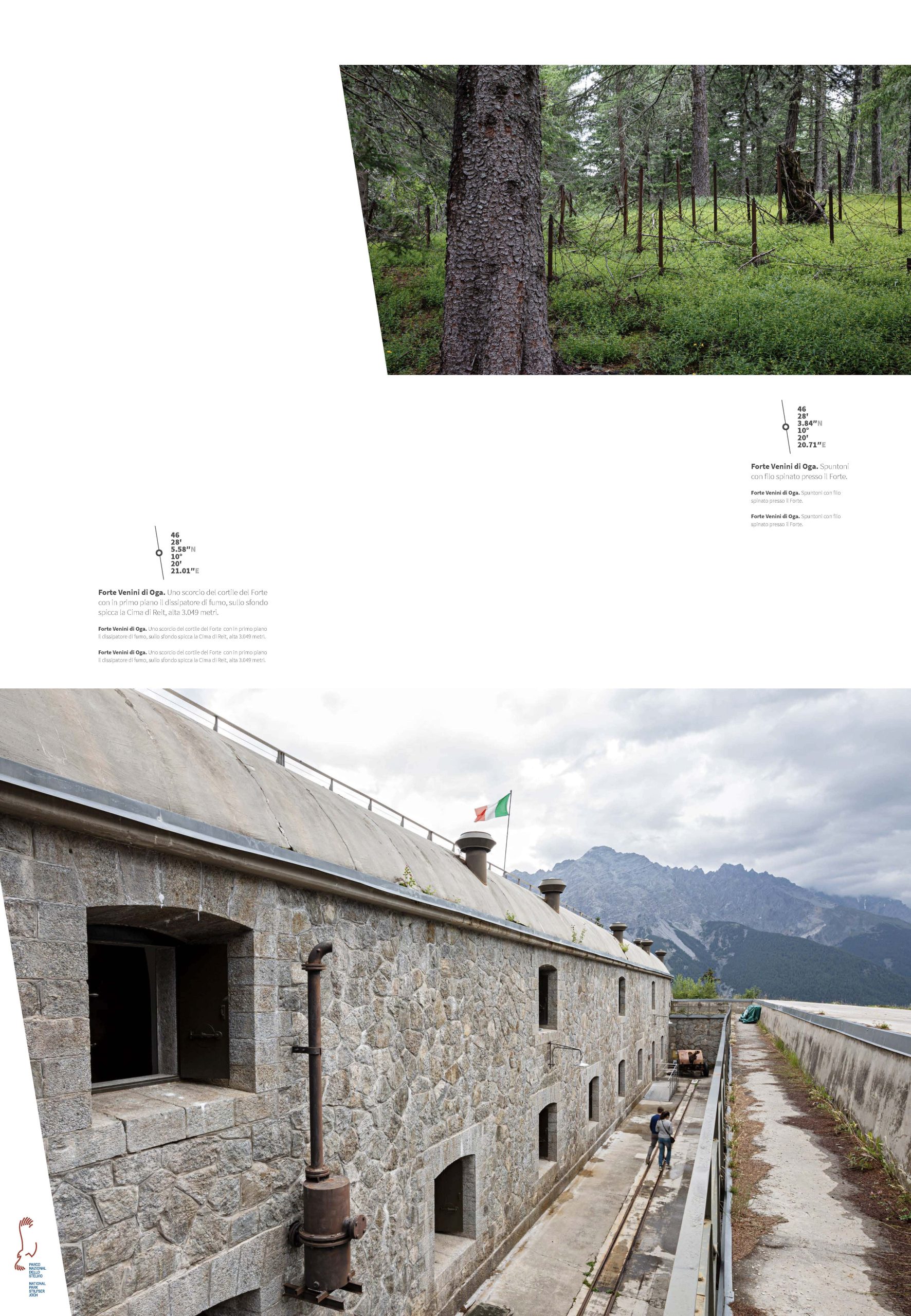
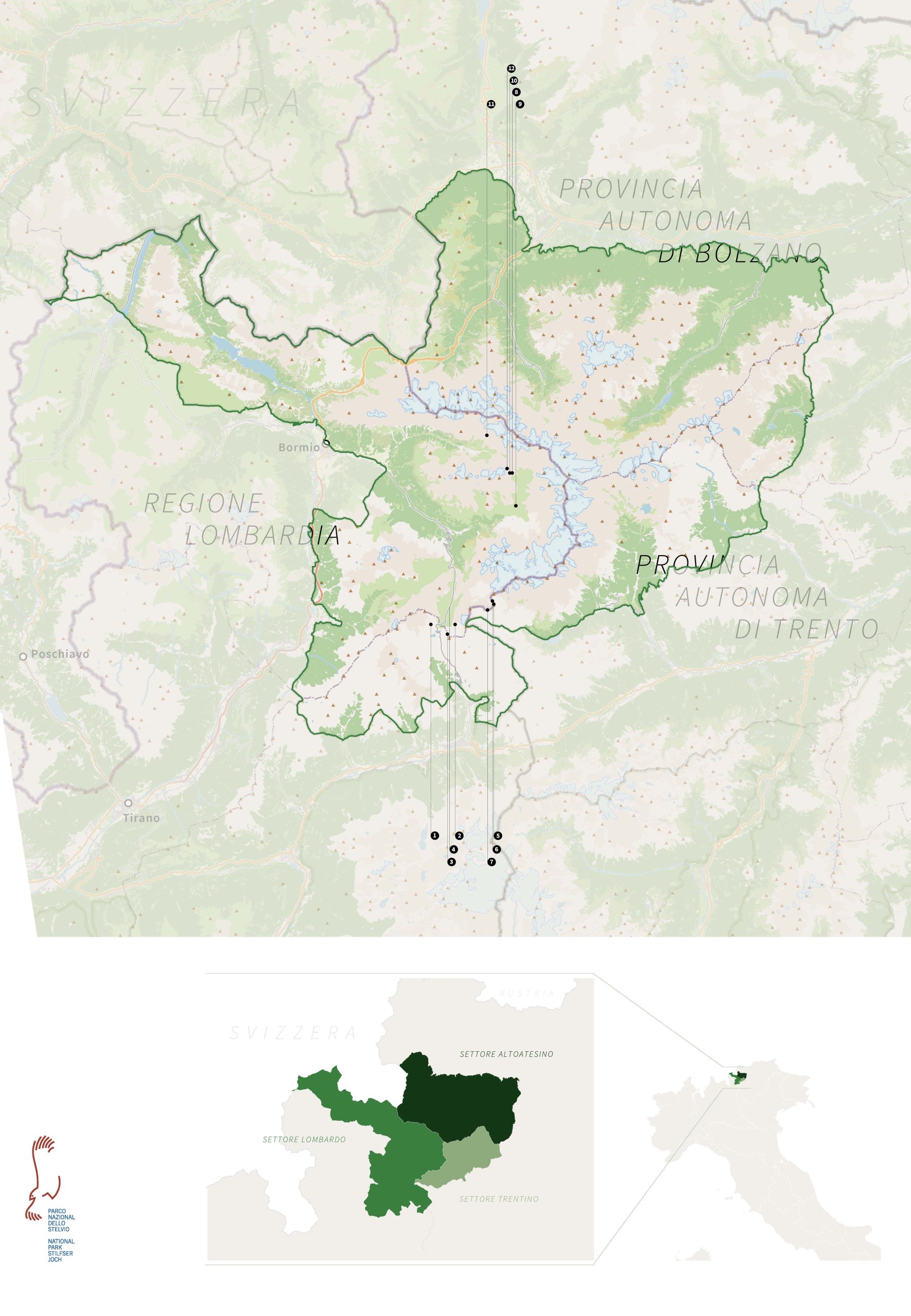
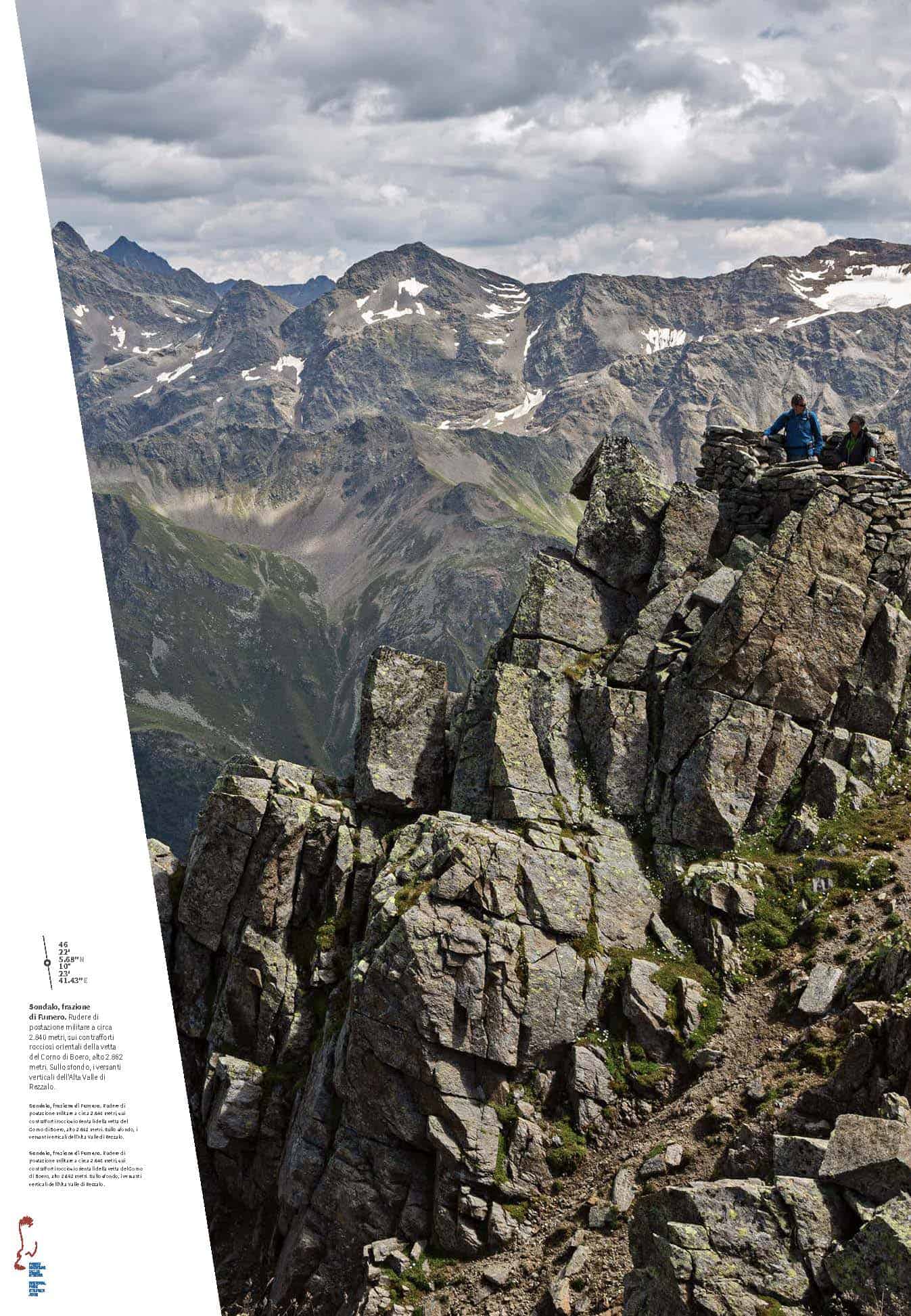
The photographs displayed here were taken by Elio Della Ferrera as part of the communication activity in the Great War area project: promotion of testimonies and recovery of artefacts (trench itineraries) (Subsidised cost drawn from the POR FESR Lombardy 2014-2020 Programme Axis VI) – Lot 1 -ID Operation:1901430, CUP G99E19002020009 – @ Parco Nazionale dello Stelvio.
The historical documents have been identified and reproduced by Giovanni Cadioli as part of the same Great War area project and courtesy of the following institutions: Archive of the Museo Storico Italiano della Guerra (Rovereto, Trento); Historical Archive of the Arma del Genio (Rome).
Scientific Coordinator of the project: Stefano Morosini. Conception, development and revision of the contents by: Francesco Antonelli, Andrea Brambilla, Loredana Dresti, Doriana Faifer, Massimo Favaron, Daniela Praolini.